
Key takeaways
- Bad sales habits lose deals through small daily slips, not one big mistake.
- Slow lead response and inconsistent follow-up cost the most.
- Turn every promise into a task or scheduled message instead of relying on memory.
- A simple weekly routine protects your selling time.
The bad sales habits that hurt productivity most are slow lead response, giving up after one follow-up, poor CRM records, spending prime hours on admin, and ending calls without a clear next step. Fortunately, most are fixed with simple systems, not willpower.
Why Small Bad Sales Habits Cost Big Deals
Most sales teams do not lose deals because of one big mistake. Instead, they lose them slowly, through small habits repeated every day. A follow-up that waits until tomorrow. Or a CRM note that never gets written. Then a morning spent answering internal emails instead of calling leads.
Yet none of these feel serious in the moment. Added up over weeks and months, they explain a lot of the gap between average and strong sales performance.
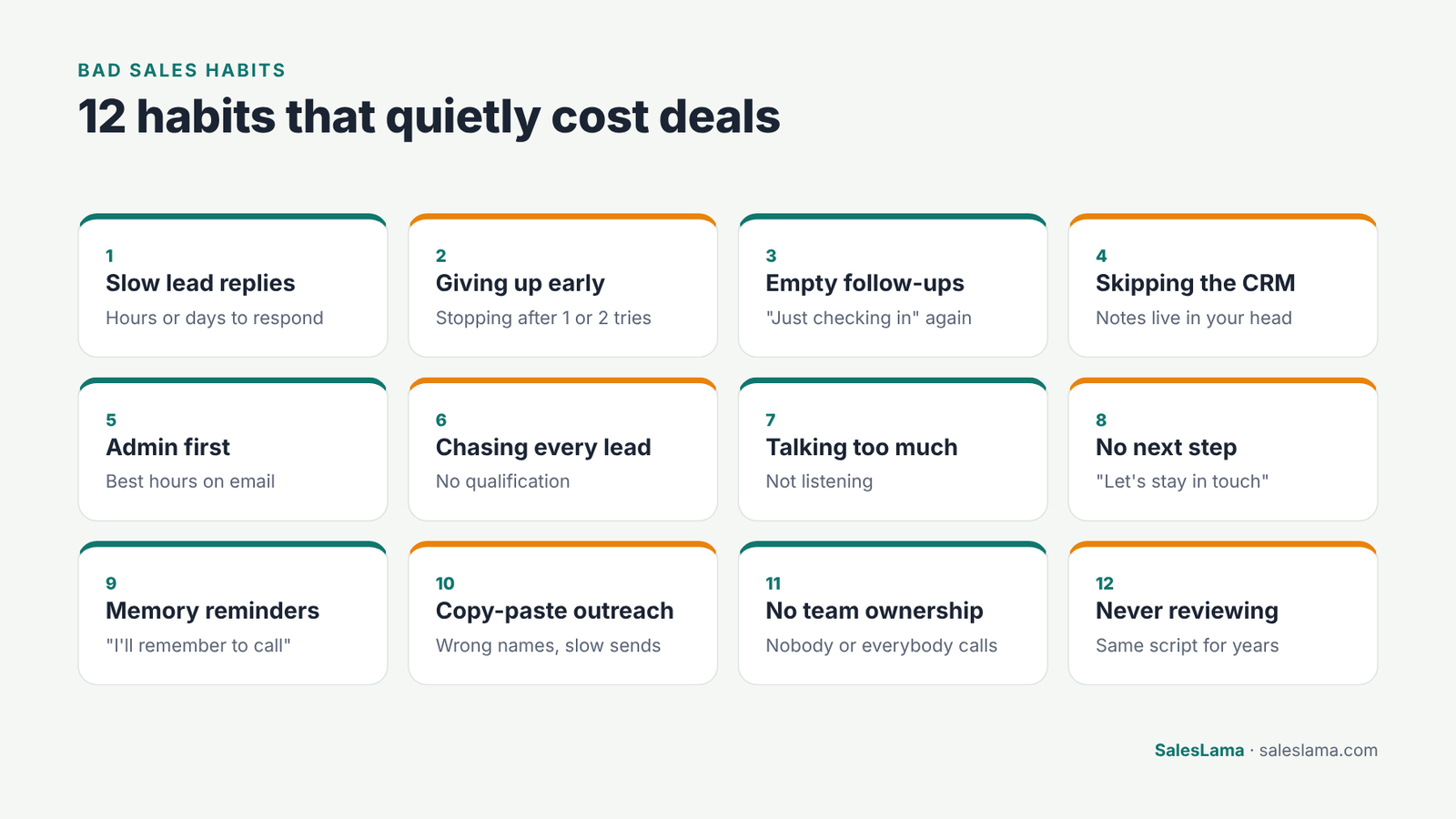
This article covers 12 bad sales habits that hurt productivity, why each one matters, and a practical fix you can start using this week. Some fixes are about discipline. Many are about setting up simple systems so the right thing happens without relying on memory.
Table of contents
- How Bad Sales Habits Impact Productivity
- 1. Waiting Too Long to Respond to New Leads
- 2. Giving Up After One or Two Follow-Ups
- 3. Following Up Without Adding Value
- 4. Not Updating the CRM
- 5. Spending the Best Hours on Admin
- 6. Chasing Every Lead Equally
- 7. Talking More Than Listening
- 8. Not Setting a Clear Next Step
- 9. Relying on Memory for Reminders
- 10. Copying and Pasting the Same Message by Hand
- 11. Not Coordinating with the Team
- 12. Never Reviewing What Works
- A Simple Weekly Routine to Replace Bad Habits
- Where Automation Helps
- Frequently Asked Questions
- Final Thoughts
How Bad Sales Habits Impact Productivity
Sales productivity is about how much useful selling time turns into real progress: conversations, meetings, proposals, and closed deals. Bad habits hurt productivity in three main ways:
- They waste time. Hours go to low-value tasks instead of talking to buyers.
- They let leads slip. Prospects go cold because follow-up is slow or inconsistent.
- They hide problems. Poor records make it hard to see what is working and where deals are stuck.
However, the good news is that habits can be changed. In fact, you do not need to overhaul everything at once. Pick the two or three habits on this list that cost you the most and fix those first.
Which bad sales habit should I fix first?
A: Lead response time and follow-up consistency. In particular, they usually have the biggest effect on how many leads become conversations.
1. Waiting Too Long to Respond to New Leads
A new lead is most interested right after they reach out. They have a question in mind and are ready to talk. If the reply comes hours or days later, they may have already spoken with a competitor or lost interest.
Many salespeople mean to reply quickly but get pulled into meetings or other work.
The fix: Set up an automatic first reply that goes out within minutes, personalized with the lead’s name and what they asked about. Then create a task for a person to follow up properly. As a result, the automated message buys time without leaving the lead in silence. Need wording? Use our sales introduction email examples.
2. Giving Up After One or Two Follow-Ups
Many buyers do not reply to the first message. However, that does not always mean they are not interested. They might be busy, travelling, or simply missed it. Salespeople who stop after one or two attempts leave a lot of potential deals behind.
The fix: Plan a follow-up sequence in advance, for example on day 1, day 3, day 7, and day 14. Each message should add something new, such as an answer to a common question or a relevant example. Then stop the sequence as soon as the prospect replies. Here is how to automate sales follow-up without losing the human thread.
3. Following Up Without Adding Value
The opposite problem is following up with the same message again and again. “Just checking in” emails rarely move a deal forward and can make you look pushy, or as buyers put it, salesy.
The fix: Before each follow-up, ask what new thing you can offer. It might be a short case study, a useful article, an answer to an objection, or a simple question about their timeline. Our gentle reminder email templates show how to nudge without nagging.
Related read: How to Write a Gentle Reminder Email (Templates for Every Situation)
4. Not Updating the CRM
Every salesperson has heard “if it is not in the CRM, it did not happen.” Yet many still keep key details in their head, their inbox, or a notebook. When notes are missing, managers cannot coach, teammates cannot help, and the salesperson forgets what was said three weeks ago.
The fix: Make updates small and immediate. Log the key outcome right after each call: what was discussed, what happens next, and when. Choose a CRM that lets automations handle routine updates, such as moving a lead to a new stage or adding a tag when they reply.
5. Spending the Best Hours on Admin
Many salespeople start the day by clearing their inbox, updating spreadsheets, and attending internal meetings. By the time they get to prospecting, it is late morning and energy has dropped.
The fix: Protect a block of time each day for selling activities only, such as calls, follow-ups, and meetings with prospects. Instead, move admin to a fixed slot later in the day. Also, automate any admin task you do more than a few times a week.
6. Chasing Every Lead Equally
Not all leads are equal. Some are ready to buy now. Others are months away, while some will never buy. Treating them all the same means spending too much time on poor-fit leads and too little on hot ones.
The fix: Use simple qualification. Tag leads by timeline, budget, or interest level. Send long-term leads into a slower nurture sequence and focus your personal time on the leads showing real buying signals, such as replying, opening several emails, or booking a meeting. Qualification gets much easier when your intake form asks the right questions.
Break bad sales habits by making replies and follow-up automatic
SalesLama answers new leads in seconds, runs follow-ups that stop on reply, and gives every lead an owner.
7. Talking More Than Listening
Of course, it is tempting to fill a sales call with product details. But buyers usually care more about their own problem than your features. As a result, salespeople who talk too much often miss the information that would help them close.
The fix: Prepare good questions before each call. Aim to understand the buyer’s situation, what is not working today, and what a good outcome looks like for them. Then connect your solution to what they said, not to a generic pitch.
8. Not Setting a Clear Next Step
Many sales conversations end with “Sounds good, let’s stay in touch.” Without a specific next step, the deal drifts.
The fix: End every conversation with an agreed action and a date. “I will send the proposal by Thursday, and we will talk Friday at 2 PM” keeps momentum. Log that next step as a task with a due date so it does not depend on memory.
9. Relying on Memory for Reminders
“I will remember to call her next week.” Sometimes you do. Often you do not. Memory is not a reliable system, especially when you are managing dozens of leads.
The fix: Every promise you make to a prospect should become a task or a scheduled message. Birthdays, contract renewals, and check-ins after a purchase can all be triggered automatically.
Can a CRM fix bad sales habits?
A: Not on its own, but automated replies, follow-ups and tasks make good habits the default.
10. Copying and Pasting the Same Message by Hand
Sending the same email to 40 prospects one at a time, changing only the name, is slow and error-prone. It is also how people end up calling “Priya” by the name “Sarah.”
The fix: Use templates with personalization fields for name, company, product, or property. Send them through a campaign tool that fills in the details correctly and logs each message automatically. Start from our sales pitch email templates.
11. Not Coordinating with the Team
On sales teams, two common problems are leads that nobody owns and leads that two people contact at the same time. Both look unprofessional and waste time.
The fix: Instead, assign every lead to one owner as soon as it arrives. Use a shared inbox or shared timeline so everyone can see the latest conversation before reaching out. When a lead does change hands, make sure the CRM handoff keeps the full context.
12. Never Reviewing What Works
Some salespeople keep using the same scripts, emails, and approach for years without checking whether they work. Without review, bad habits become permanent.
The fix: Finally, once a month, look at a few simple numbers. How fast do you respond to new leads? How many follow-ups does it take to get a reply? Which lead sources turn into meetings? Then use what you learn to adjust one thing at a time.
A Simple Weekly Routine to Replace Bad Sales Habits
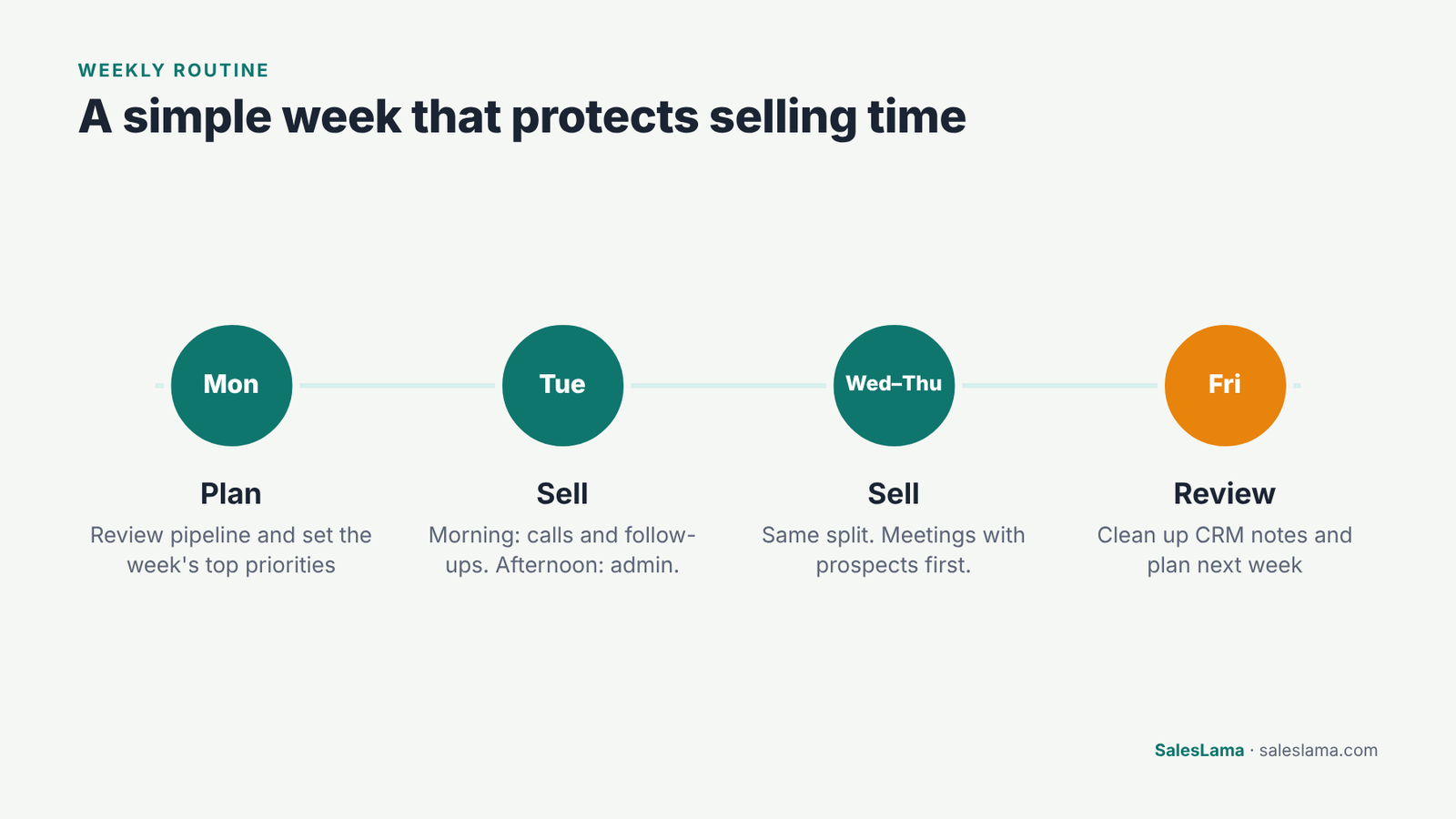
In practice, changing habits is easier with a routine. For example, here is a simple routine for an individual salesperson:
| Day | Focus |
|---|---|
| Monday | Review pipeline, set top priorities for the week |
| Tuesday to Thursday | Morning selling block: calls, follow-ups, meetings. Afternoon admin block. |
| Friday | Clean up CRM notes, plan next week’s follow-ups, review results |
In the end, the exact schedule matters less than having one. A routine reduces the number of decisions you make each day and keeps selling time protected.
Where Automation Helps Fix Bad Sales Habits
Several of the habits above come down to the same problem: important tasks depend on someone remembering to do them at the right time. For this reason, automation fixes that by making the routine steps happen on schedule.
SalesLama is a CRM and sales automation platform that targets exactly these gaps. You can:
- Reply to new leads in seconds by email, SMS, or WhatsApp, using messages you write.
- Run follow-up sequences with waits between steps, which stop automatically when a lead replies.
- Assign an owner to every new lead and create tasks with due dates.
- Move leads through pipeline stages and add tags based on their actions.
- Keep replies in a shared inbox so the team sees the same conversation.
- Use triggers like form submissions, booked appointments, or birthdays to start the right workflow.
None of this replaces good selling. It just removes the repetitive work and the reliance on memory, so your time goes into conversations. You can start a free trial here.
Bad Sales Habits: Frequently Asked Questions
What are the most common bad sales habits?
Slow lead response, inconsistent follow-up, poor CRM records, talking more than listening, and ending conversations without a clear next step are among the most common.
How do bad sales habits impact productivity?
They waste selling time, let good leads go cold, and make it harder to see what is working. Over time, small habits can have a large effect on results.
How long does it take to change a sales habit?
It varies by person and habit. Using systems such as automated reminders, templates, and a set routine makes change easier because you rely less on willpower.
Can a CRM fix bad sales habits?
A CRM does not fix habits on its own, but it makes good habits easier. Automated follow-ups, tasks, and reminders reduce the number of things a salesperson has to remember.
What is the first habit I should fix?
For most teams, start with lead response time and follow-up consistency. Above all, these two habits usually have the biggest effect on how many leads turn into conversations.
Related reading: for more practical guides, see the 7 sales process steps, CRM and sales enablement tools and real estate pipeline management.
Final Thoughts on Bad Sales Habits
Bad sales habits rarely feel like a big deal on any single day. Over time, they quietly cost deals and hours. Pick the habits that affect you most, fix them one by one, and use systems to handle the routine steps.
If you want help making fast replies and consistent follow-up automatic, take a look at SalesLama and create a free account.
Ready to stop losing leads to slow follow-up?
SalesLama replies to new leads in seconds, follows up by email, SMS and WhatsApp, and hands hot leads to your team when they reply.