Key takeaways
- A sales introduction email answers two questions fast: why you are writing and what you want.
- Keep it under 150 words with one clear next step.
- Lead with the reader, not “My name is…”.
- Reply to inbound leads within minutes, then follow up on day 3, 7 and 14.
A sales introduction email is a short first message that explains why you are reaching out, who you are in one sentence, how you can help, and one easy next step, all in under 150 words.
A sales introduction email is the first message you send to someone who does not know you yet. It might be a cold prospect, a lead who filled out a form, a new client you have just been assigned, or someone a colleague referred to you.
Whatever the situation, the job is the same. You want the reader to understand who you are, why you are contacting them, and what they can do next, in less time than it takes to drink a sip of coffee.
That sounds simple, but a lot of introduction emails miss. They are too long, too formal, or too focused on the sender. This article shows you how to write an introductory sales email that is clear and friendly, with examples for the most common situations.
Table of contents
- What Makes a Good Sales Introduction Email
- The Basic Structure
- Subject Lines for Introduction Emails
- Sales Introduction Email Examples
- A Salesperson Introduction Email Template
- Tips for Better Introduction Emails
- Following Up on an Introduction Email
- Sending Introduction Emails at Scale
- Frequently Asked Questions
- Final Thoughts
What Makes a Good Sales Introduction Email
The best introduction emails share a few qualities:
- They are short. Usually under 150 words.
- They explain the reason for contact. The reader should not have to guess why you are writing.
- They focus on the reader. Their situation comes before your company.
- They offer one clear next step. A question, a short call, or a resource.
- They sound like a person. Plain language, no buzzwords.
If you only remember one thing, remember this: the reader is asking “Why is this person emailing me, and what do they want?” Answer both questions quickly.
How long should a sales introduction email be?
A: Under 150 words. Short emails are easier to read on a phone and more likely to get a reply.
The Basic Structure of a Sales Introduction Email
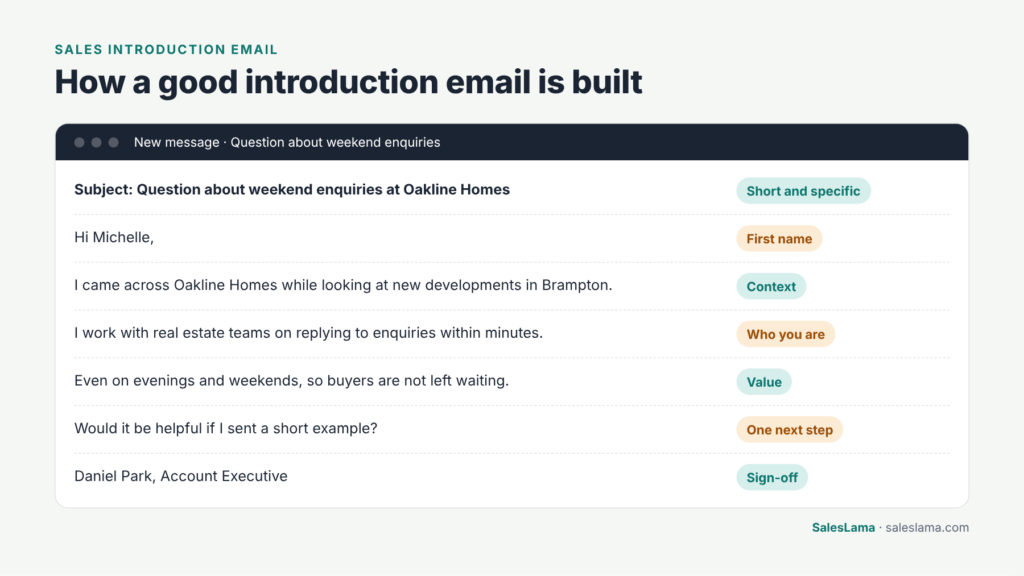
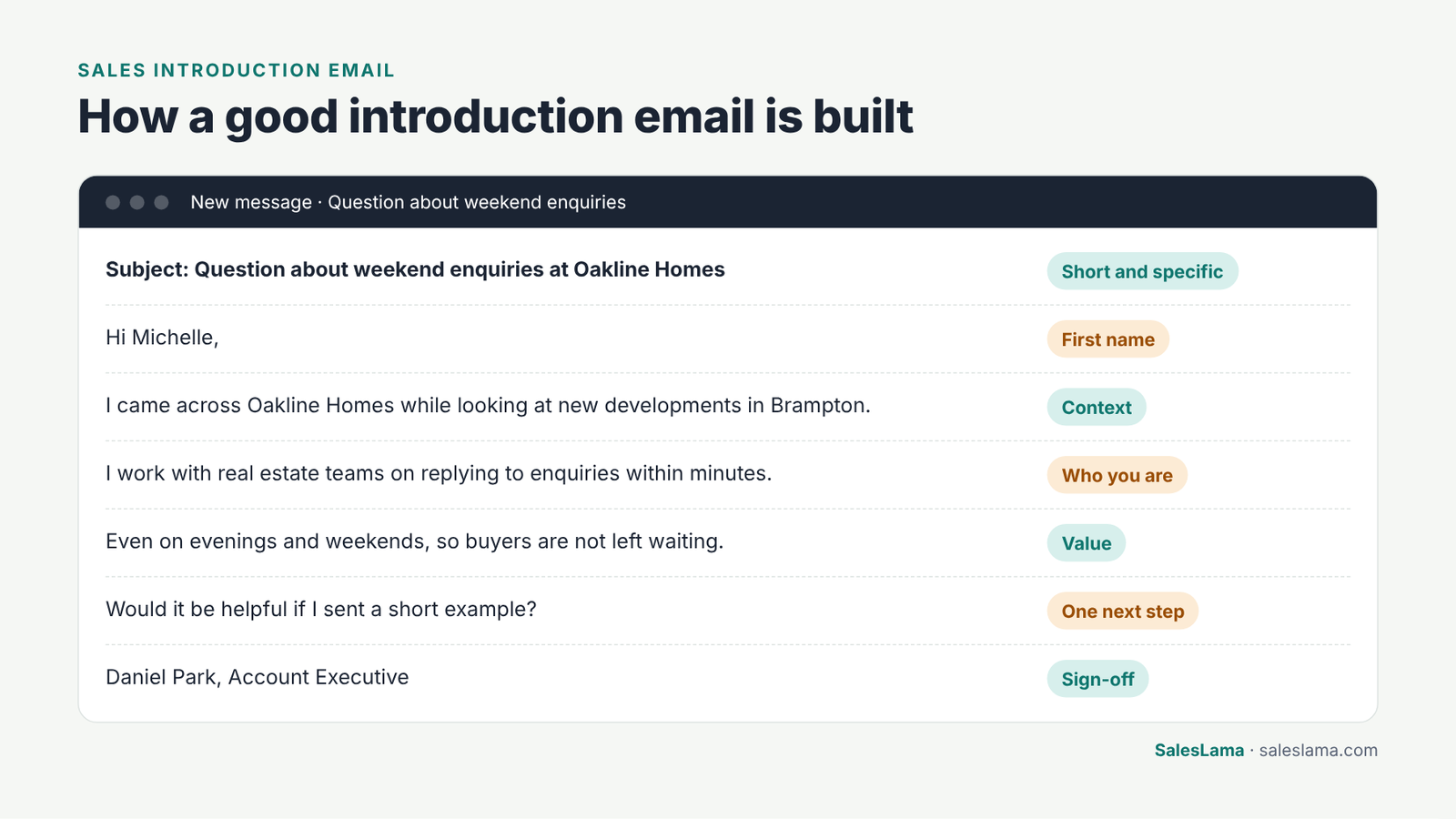
Most strong sales introduction emails follow a pattern like this:
- Subject line: Short and specific.
- Greeting: Use their first name.
- Context: How you found them or why you are reaching out now.
- Who you are: One sentence, connected to their needs.
- Value: How you might help, with a specific example if possible.
- Next step: A simple question or offer.
- Sign-off: Your name, role, and contact details.
You do not need to follow it rigidly, but if your email is missing the context or the next step, it will probably feel confusing.
Subject Lines for a Sales Introduction Email
The subject line should tell the reader what the email is about. Clear beats clever.
Good examples:
- “Introduction from Daniel at Harbor Realty”
- “Your new account manager at Brightline”
- “Following up on your website enquiry”
- “Referred by Sarah Chen”
- “Quick question about your Calgary office”
Avoid vague subject lines like “Hello” or “Touching base,” and avoid anything that looks like spam, such as excessive punctuation or all caps.
Sales Introduction Email Examples
Example 1: Cold introduction to a prospect
Subject: Question about weekend enquiries at Oakline Homes
Hi Michelle,
I came across Oakline Homes while looking at new developments in the Brampton area. It looks like you get a lot of buyer enquiries through your website.
I work with real estate teams to make sure those enquiries get a reply within minutes, even on evenings and weekends.
Would it be helpful if I sent a short example of how one team does it?
Best,
Daniel Park
Account Executive, [Company]
Why it works: It explains how Daniel found Michelle, connects his role to a likely problem, and ends with an easy yes or no question.
Example 2: Reply to an inbound lead
When someone fills out a form or requests information, your introduction should be quick and helpful. They already know who you are. They want an answer. (The details they gave you depend on your form, so it pays to build a better intake form.)
Subject: Your question about the Riverside condos
Hi Ahmed,
Thanks for asking about the Riverside condos. I am Laura, and I will be helping you with your search.
Units with two bedrooms are still available, and I can send floor plans today. Would you prefer a quick call or should I send the details by email first?
Talk soon,
Laura
Why it works: It answers the question, introduces Laura in one line, and offers a choice of next steps.
Example 3: Introducing yourself as a new account manager
Subject: Your new account manager at Brightline
Hi Kevin,
I am Sophie, and I will be your account manager at Brightline from this month. James has moved to a new role, and he has shared the history of your account with me so nothing gets lost.
I would love to hear how things are going and whether there is anything we can do better. Would a 15-minute call next week work? Tuesday or Wednesday morning are both open for me.
Thanks,
Sophie
Why it works: It addresses the change directly, reassures the client, and proposes specific times. It only works if the CRM handoff kept the account’s context.
Example 4: Referral introduction
Subject: Referred by Sarah Chen
Hi Tom,
Sarah Chen suggested I get in touch. She mentioned your team is looking for a better way to keep track of leads from open houses.
We helped Sarah’s team switch from paper sign-in sheets to a tablet form that follows up with every visitor the same day.
Would you be open to a short call to see if something similar could work for you?
Best,
Omar
Why it works: The referral comes first, which earns attention. The example is specific and relevant.
Example 5: Introducing yourself after an event
Subject: Great meeting you at the Toronto Real Estate Expo
Hi Grace,
It was good to meet you at the expo on Saturday. I enjoyed our chat about agent recruiting.
As promised, here is the short guide on recruiting follow-up I mentioned. If you would like to talk through how your brokerage could use it, I am happy to set up a call.
Thanks again,
Ryan
Why it works: It reminds Grace where they met, delivers what was promised, and leaves the next step open.
Related read: Sales Pitch Email Examples That Get Replies
A Sales Introduction Email Template
Use this template as a starting point and adjust it to your voice.
Subject: [Specific reason for contact]
Hi [First name],
[How you found them, who referred you, or why you are writing now.]
[One sentence about who you are and how you help, tied to their situation.]
[A specific example or benefit, if you have one.]
[A simple next step: question, short call, or resource.]
[Your name]
[Role, company, phone]
Keep the personal lines personal. A template saves time on structure, but the first sentence should always be written for the specific reader.
Send your introduction the moment a lead arrives
SalesLama replies to new leads in seconds by email, SMS or WhatsApp, using the message you wrote.
Tips for a Better Sales Introduction Email
Do a little research first
Spend two or three minutes looking at the prospect’s website, LinkedIn profile, or recent news. One real detail makes the email feel personal.
Lead with them, not you
Starting with “My name is…” or “We are a leading provider of…” puts the focus on you. Start with something about their business or their question. It is the quickest way to avoid sounding salesy.
Keep one goal per email
Do not ask for a call, share three links, and request a referral in the same email. Choose one goal.
Make replying easy
Questions like “Would Tuesday or Wednesday work better?” are easier to answer than “Let me know your availability.”
Mind the timing
For inbound leads, speed matters most. Reply within minutes if you can. For cold introductions, avoid sending late at night in the reader’s time zone.
Check the details
Wrong names, wrong company names, and broken links ruin a good email. Read it once before sending.
How fast should I reply to an inbound lead?
A: Within minutes if you can. Leads are most engaged right after they reach out.
Following Up on a Sales Introduction Email
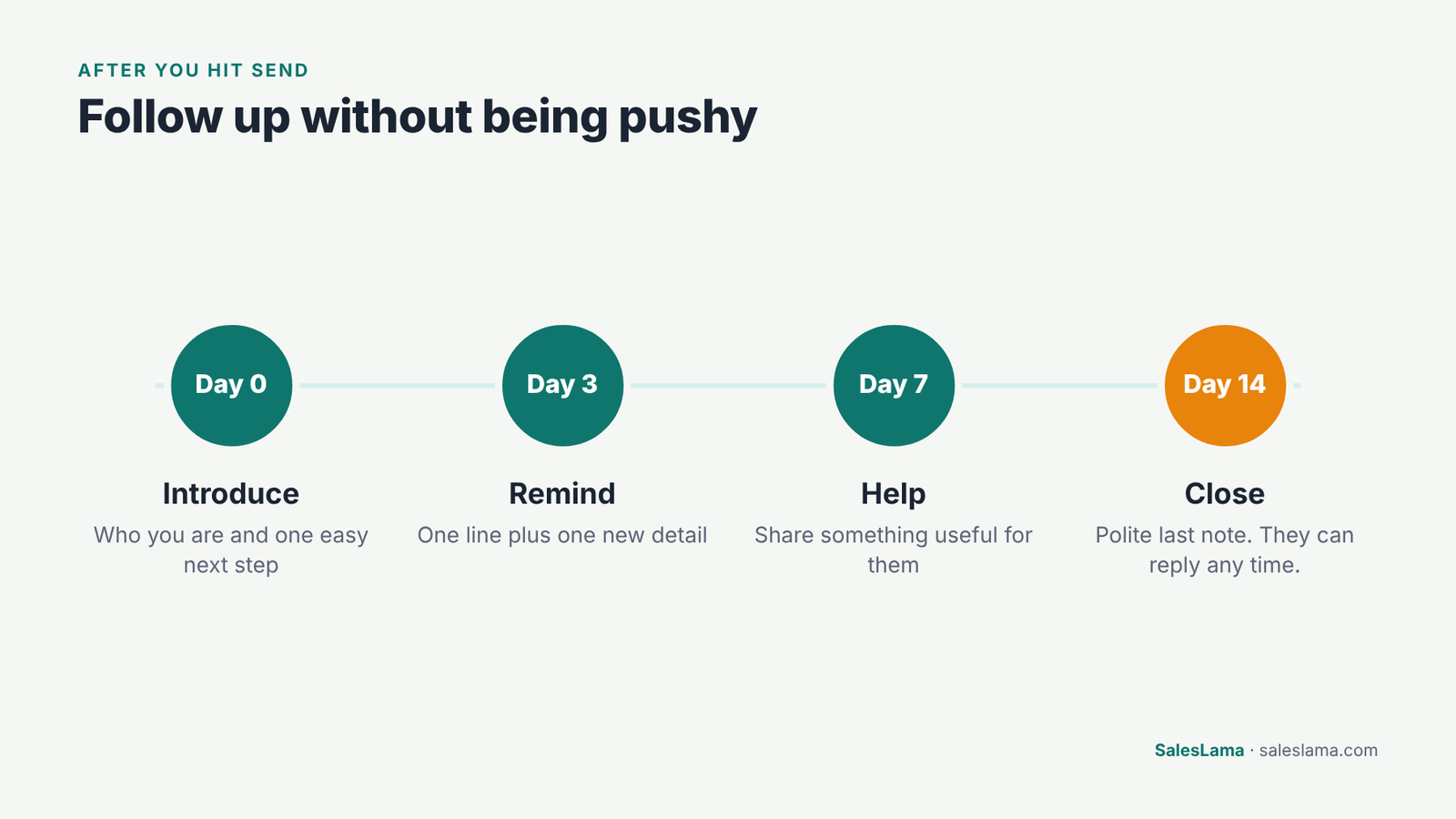
Many people will not reply to the first message, and that is normal. A short follow-up plan helps:
- Day 3: Reply to your own email with a one-line reminder and one new detail.
- Day 7: Share something useful related to their situation.
- Day 14: Send a polite last note saying you will not keep emailing, but they can reply any time.
If they reply at any point, stop the sequence and continue the conversation personally. For ready-to-use wording, see how to write a gentle reminder email.
Sending a Sales Introduction Email at Scale
If you handle a steady flow of inbound leads, writing each introduction email by hand quickly becomes a bottleneck. Leads wait, and some never get a reply at all.
SalesLama is a CRM and lead automation platform that helps here. When a new lead comes in from a website form, landing page, or ad (through webhooks), SalesLama can send your introduction message within seconds by email, SMS, or WhatsApp. You write the message, and it is personalized with details such as the lead’s name, the property, and the agent’s name. Follow-ups run on a schedule you set and stop as soon as the lead replies, so a real person can take over through the shared inbox. You can start a free trial here.
Frequently Asked Questions
How long should a sales introduction email be?
Ideally under 150 words. Short emails are easier to read on a phone and more likely to get a reply.
What should I say in an introductory sales email?
Explain why you are reaching out, who you are in one sentence, how you can help, and what the next step is.
Should I attach a brochure to an introduction email?
Usually not. Attachments from unknown senders can trigger spam filters. Offer to send more information if the reader is interested.
How soon should I reply to an inbound lead?
As quickly as possible, ideally within minutes. The lead is most engaged right after they reach out.
What is the difference between a sales introduction email and a pitch email?
An introduction email focuses on starting a relationship and explaining who you are. A pitch email focuses more on a specific offer. In practice, many first emails do a bit of both. See our sales pitch email examples for the pitch side.
Related reading: for more practical guides, see pitch email examples, gentle reminder email templates and how to avoid sounding salesy.
Final Thoughts on the Sales Introduction Email
A good sales introduction email is short, clear, and written for the reader. Explain why you are reaching out, show how you can help, and make the next step easy. Then follow up politely if you do not hear back.
If you want your introduction emails to go out the moment a lead arrives, take a look at SalesLama and create your free account.
Ready to stop losing leads to slow follow-up?
SalesLama replies to new leads in seconds, follows up by email, SMS and WhatsApp, and hands hot leads to your team when they reply.